Current alarms detect wetness
Moisture clips are useful for some families, but they begin after urine reaches clothing or bedding.
Concept-stage medical device
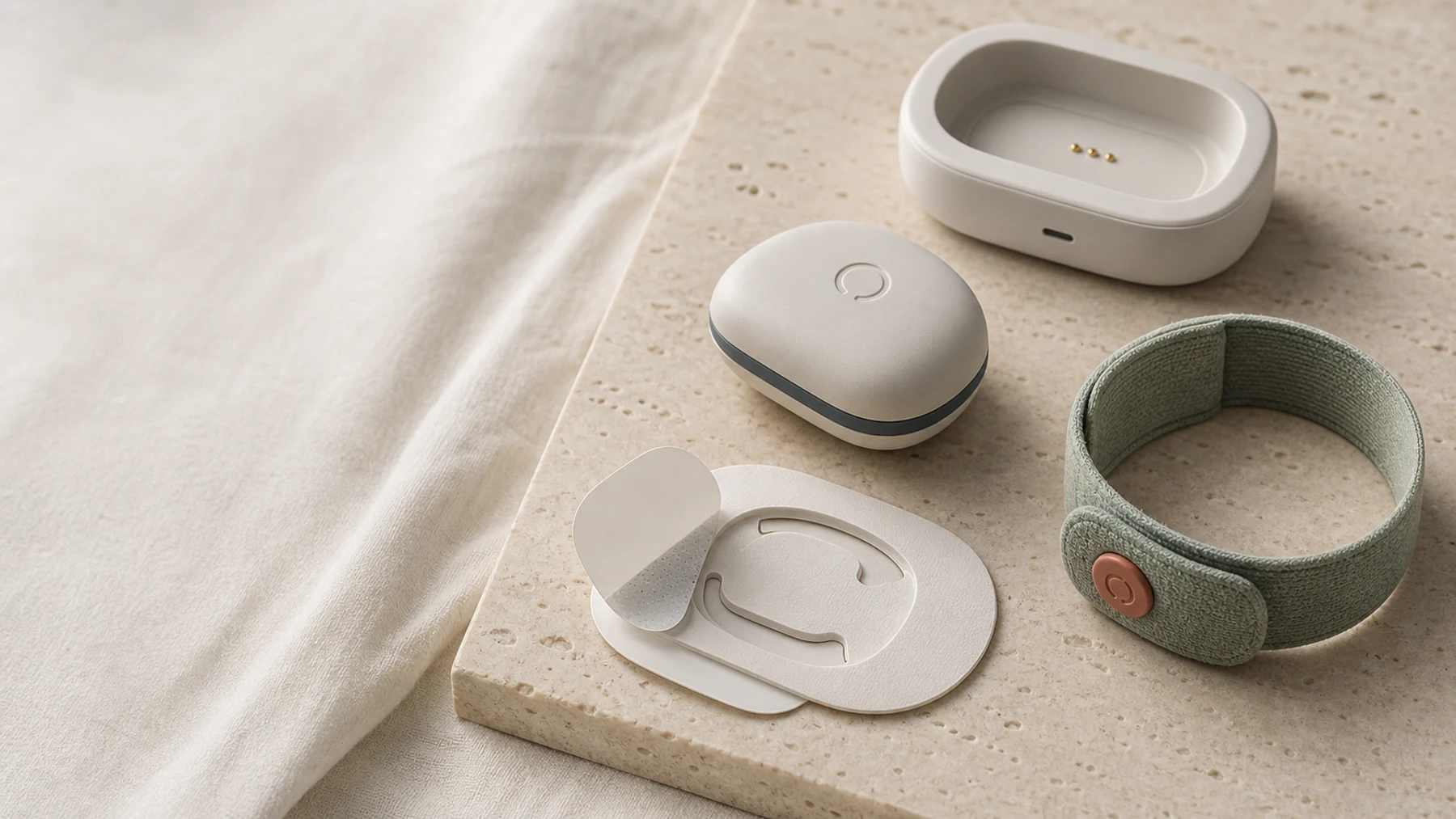
DryNight is being developed as a lower-abdomen wearable and private wristband cue for children with nocturnal enuresis. The aim is to detect bladder filling early enough for a child, parent, or caregiver to act before moisture is detected.
Prototype direction
Lower-abdomen sensing, private haptic cue, caregiver alert only when needed.
Problem
Most household tools respond after moisture appears. That delay turns a medical and developmental issue into laundry, embarrassment, and interrupted sleep. DryNight starts from a narrower question: can bladder filling be detected early enough to give the child a private cue?
Current alarms detect wetness
Moisture clips are useful for some families, but they begin after urine reaches clothing or bedding.
The child often carries the burden
Cords, loud alarms, and repeated failures can make the child feel exposed instead of supported.
Caregivers need earlier information
A useful system gives a quiet signal before the event, not a louder signal after the damage is done.
Quantitative prevalence and market-size claims should be added only after primary-source verification.
Product direction
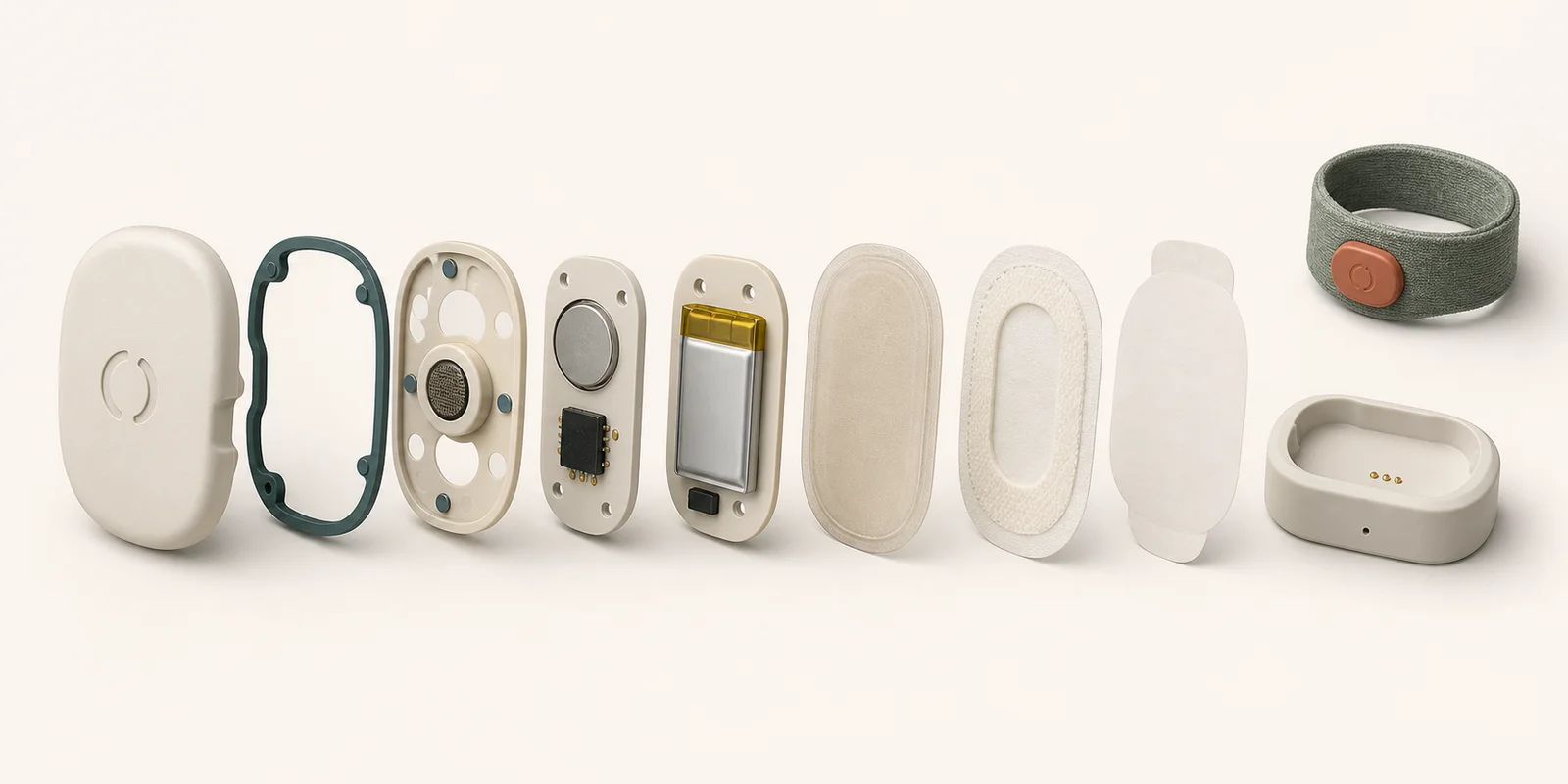
DryNight is being scoped as a soft lower-abdomen sensor, a child-worn haptic cue, and an optional caregiver alert. The product claim will only be earned after signal feasibility, usability, and clinical validation work.
Evaluate ultrasound and other noninvasive sensing methods against the practical realities of sleep, movement, skin contact, and body variation.
Prototype a cordless sensor and wristband cue that a child can sleep with comfortably for repeated nights.
Test whether the system can distinguish bladder filling from noise early enough to wake the right person at the right time.
Product thesis
The starting technical hypothesis is that a lower-abdomen wearable can estimate bladder filling well enough to trigger a private pre-void cue. Ultrasound is the lead candidate because external academic work has explored abdomen-worn bladder monitoring, but DryNight will evaluate the best sensing path before locking hardware.
Current household tools
DryNight thesis
Market focus
DryNight starts with pediatric nocturnal enuresis because the pain is specific, recurring, and poorly served by existing consumer tools. Adult incontinence remains a relevant expansion path, but the first proof point has to be narrow.
The first user is a child who can sleep through a full bladder and a parent trying to help without shame. The initial product experience should be private, comfortable, and narrow enough to test rigorously.
The same type of early bladder signal could eventually support older adults and caregivers. That market has different workflows, liability, staffing constraints, and reimbursement questions, so it belongs after pediatric feasibility.
Design standard
Not an alarm that tells a child he failed. A signal that gives him a chance.
Elvis Ndansi is building DryNight from a personal problem, but the company still has to meet the same evidence standard as any medical device.
Founder story
I grew up in Cameroon. My grandparents tried everything: raw okra, anthills, every remedy the village knew. Nothing worked. I stopped going to boarding school so no one would find out. I became the cleanest, most driven student I could be, because I was convinced no one could ever know what I was hiding at night.
Now my nine-year-old son wets the bed every night. His is more severe than mine. I refuse to shame him the way I was shamed. But the best alarms on Amazon still have cords, still detect moisture after the fact, still fail him.
So I started building what I wish I had. DryNight begins with my son, but the standard is broader: a child should not have to be wet before the system understands that help is needed.
Elvis Ndansi, Founder
Evidence status
DryNight is not presenting product performance data yet. The evidence plan starts with external precedent, hardware feasibility, usability, and then clinical validation. That sequence matters because investor confidence depends on the discipline of the claim.
Academic groups have explored abdomen-worn bladder monitoring and pre-void alerting. DryNight will cite specific publications only after each claim is verified against the primary source.
Evidence review in progress
Miniaturized ultrasound is the lead candidate, but the device architecture should stay open until bench testing compares signal quality, comfort, power, cost, and manufacturability.
Hardware path under review
No diagnostic, treatment, clearance, or approval claim belongs on the site until regulatory counsel and clinical advisors have reviewed the intended use.
Not cleared or approved
The first partner conversations should focus on study design, family burden, usability, and the minimum evidence required before making commercial claims.
Partner with usTeam
Founder & CEO
Founder of DryNight and author of Beyond Blames. He brings the lived experience, the book launch, and the urgency behind the first product question.
Clinical and strategic advisor
Physician-epidemiologist supporting the clinical framing, evidence discipline, and early regulatory thinking.
Advisory roles we are actively recruiting
Technical conversations
Early and non-committed. Named partnerships should wait for signed agreements.
Contact
The useful next step is not a waitlist count. It is a focused group of parents, clinicians, engineers, operators, and investors who can pressure-test the product before the claims get ahead of the evidence.
Investor inquiries should focus on feasibility, evidence plan, and the path to a defensible first prototype.